 Skip to Content

U.S. Practitioners: Claims Made vs Occurrence; Buy Tail Now
Occurrence policies respond when the incident happens, not when someone files paperwork about it. Claims-made policies respond when the claim is actually made and reported to the insurer, no matter when the underlying incident occurred. That distinction decides whether you need to buy extended reporting coverage later, whether a retroactive date can quietly erase old exposure, and whether your premium stays flat or climbs every year.
TL;DR:
- Claims-made policies only respond to claims reported during the policy period, requiring careful management of retroactive dates and tail coverage.
- Occurrence policies cover incidents that happen while the policy is active, regardless of when the claim is filed, offering more long-term protection without needing tail coverage.
- Switching claims-made insurers can create gaps if the retroactive date is not preserved, while occurrence policies automatically provide coverage based on when the incident occurred.
- Premiums for claims-made policies are lower initially but tend to rise over time, with tail coverage costs potentially exceeding those of occurrence policies.
- Proper policy review, including verifying retroactive dates and understanding tail coverage options, is essential to prevent costly coverage gaps and disputes.
Table of Contents
- Claims Made vs. Occurrence: How Each Trigger Actually Works
- What an Occurrence Policy Covers and When It Pays Out
- Claims-Made vs. Occurrence: What Changes in a Real Dispute
- Protecting Your Retroactive Date and Buying the Right Tail Coverage
- What Claims-Made and Occurrence Coverage Actually Cost Over Time
- Choosing Between Claims-Made and Occurrence: A Practical Checklist
- The Legal Angle: Why Policy Language Becomes a Litigation Battleground
- Where to Read the Original Guidance
- Sources
Claims Made vs. Occurrence: How Each Trigger Actually Works
The word “trigger” refers to the event that activates your coverage, and it’s the single detail that separates these two policy forms. Occurrence coverage attaches the moment an injury or damage happens, even if nobody files a claim for years. Claims-made coverage attaches only when a claim is reported while the policy is active, regardless of when the underlying incident occurred, according to NAIC guidance and consistent with how The Hartford explains it to commercial buyers.
A claims-made policy is also stricter than most people assume. Industry analysis of the ISO claims-made CGL form notes that an actual claim, not just notice of a potential problem, has to arrive during the policy period to trigger coverage, per PropertyCasualty360. Here’s what shapes a claims-made policy in practice:
- Retroactive date: the earliest date an incident can have occurred and still be covered, often set to your first day of continuous coverage.
- Reporting window: the deadline for notifying the insurer once you become aware of a claim or circumstance that could become one.
- Extended reporting period (ERP or “tail”): optional or automatic coverage that lets you report claims after the policy ends, for incidents that happened while it was active.
- “Claims-made and reported” language: a stricter variant requiring both the incident and the report to fall within the same policy term.
Medical malpractice and professional liability policies rely on claims-made structure because injuries or errors can surface years after the actual event. If you’re reviewing one, check the declarations page for the retroactive date and the endorsement page for ERP terms before you assume you’re covered.
What an Occurrence Policy Covers and When It Pays Out
An occurrence policy locks in coverage based on when the incident happened, full stop. It doesn’t matter if the claim shows up two years or ten years later. As long as the injury or damage occurred while the policy was in force, that policy responds. Here’s how that plays out:
- The trigger is fixed at the moment of loss. A slip-and-fall at a retail store in 2023 stays covered under the 2023 policy even if the lawsuit lands in 2026.
- You don’t need tail coverage. Because the policy follows the incident, not the report date, there’s no gap to fill when the policy expires or you switch carriers.
- Late-filed claims are still valid. The Hartford confirms occurrence coverage lasts beyond the policy’s expiration date for events that happened during the term.
- It’s the default for general liability. Commercial general liability (CGL) policies and most standard business liability lines use occurrence forms, according to the Insurance Training Center.
Picture two contractors with identical policies, except one is occurrence and one is claims-made. Both cause property damage in March. If the claims-made contractor let that policy lapse by the time the claim surfaces in the fall, they’re exposed unless they bought tail coverage. The occurrence contractor is protected regardless of what happens to that policy afterward.
Claims-Made vs. Occurrence: What Changes in a Real Dispute
The theoretical difference between these two forms becomes very real the moment a claim actually surfaces. Here’s where the gap shows up:
- Trigger timing: occurrence locks to the incident date; claims-made locks to the report date, creating a moving target insurers scrutinize closely.
- Retroactive dates only exist on claims-made forms. Switch carriers without preserving that date, and you can create a coverage hole for anything that happened before the new policy started, even though you had insurance at the time.
- Tail coverage becomes a negotiation, not an afterthought. Retiring, closing a practice, or changing carriers without buying an extended reporting period can leave prior acts completely unprotected.
- Delayed discovery claims hit claims-made policies hardest. A construction defect or a missed diagnosis that doesn’t surface for years is exactly the scenario occurrence coverage was built to absorb.
Consider a physician who carries claims-made coverage for a decade, then retires and lets the policy lapse without buying tail coverage. A patient files a malpractice claim eighteen months later for treatment from three years earlier. Without an ERP, there’s no active claims-made policy to report to, and the retroactive date on any new policy won’t reach back far enough to help.
Now compare that to a general contractor with an occurrence CGL policy who finishes a job in 2022 and gets sued in 2026 over a structural issue that traces back to that work. The 2022 policy responds because the incident, not the lawsuit, is what matters. That’s the practical weight behind the question of which is better, claims made or occurrence: it depends entirely on how exposed your profession is to delayed discovery.
Protecting Your Retroactive Date and Buying the Right Tail Coverage
Your retroactive date is the anchor point for every claims-made policy you’ll ever hold, and losing it is the single most common way professionals end up with an unintentional coverage gap. When you switch insurers, negotiate the new policy to honor your original retroactive date rather than resetting it to the new start date. Losing that continuity means anything that happened before the new policy began is simply not covered anywhere.
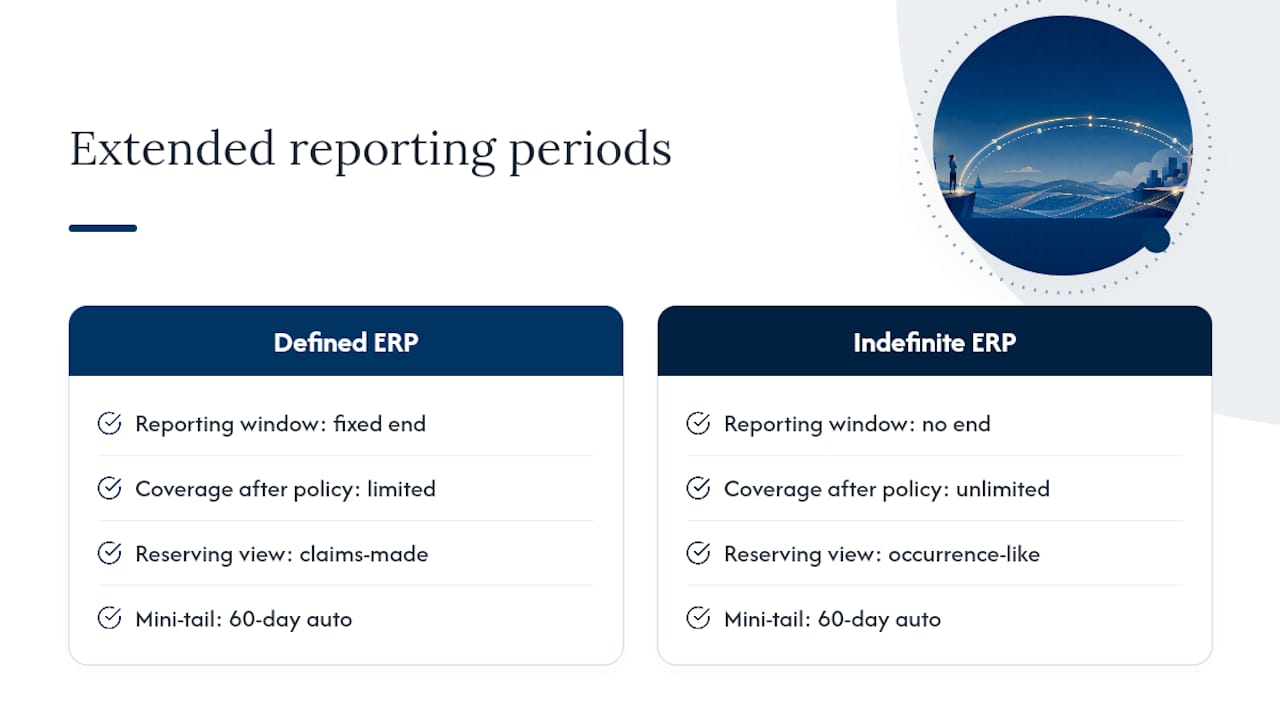
Extended reporting periods come in two flavors. A defined ERP gives you a fixed window to report claims after the policy ends. An indefinite ERP has no expiration at all, and PwC’s accounting guidance notes that an indefinite ERP effectively converts a claims-made policy into occurrence-like coverage for reserving purposes. Many policies also include an automatic “mini-tail,” often a 60-day basic reporting window, built in at no extra cost, according to PropertyCasualty360.
Pro Tip: Buy tail coverage before you retire or close a firm, not after. Once the policy lapses without an ERP endorsement in place, insurers generally won’t let you add one retroactively.

What Claims-Made and Occurrence Coverage Actually Cost Over Time
Occurrence policies typically carry a higher premium from day one, because the insurer is accepting open-ended exposure with no expiration on when a claim might surface. Claims-made policies flip that math:
- Year one is cheap. Claims-made starts with a lower premium since the insurer’s exposure is limited to claims reported during that specific term.
- Premiums step up over time. As reported by MoneyGeek, claims-made pricing typically rises through step-rating in years two through five, reflecting accumulating “mature” risk.
- Tail coverage adds a final, often significant, cost. PwC’s analysis shows that tail purchase can push lifetime claims-made costs above what occurrence would have cost outright.
- Ask every quote for the tail price up front. Medical, legal, and design professionals should request ERP pricing at renewal, not wait until they need it. Professional liability structures differ meaningfully from general liability, and premium costs may carry different tax treatment worth confirming with your accountant.
Choosing Between Claims-Made and Occurrence: A Practical Checklist
Before you sign anything, ask your agent these questions directly, and get the answers in writing:
- What is the exact retroactive date, and does it transfer if I switch carriers?
- Is the ERP defined or indefinite, and what does it cost at each stage?
- Does the policy require “claims-made” or the stricter “claims-made and reported”?
- What’s the reporting deadline once I become aware of a potential claim?
Red flags to walk away from: no stated retroactive date, an ERP quoted at $0 with no explanation, or vague language defining what counts as a “claim.” Request the declarations page, the ERP endorsement, and any prior carrier’s certificate of continuous coverage before you switch. If any of that language is ambiguous, or if a carrier is disputing coverage based on timing, an attorney experienced in insurance coverage disputes should review the policy before you rely on it.
The Legal Angle: Why Policy Language Becomes a Litigation Battleground
Insurers routinely deny coverage on timing grounds: late notice, a retroactive date that predates the claim, or a narrow reading of what counts as a reportable “claim.” We’ve seen these disputes turn on a single sentence in an endorsement. Building a coverage case means reconstructing a precise timeline against every policy the client held, not just the one active when the claim surfaced.
That’s where understanding how insurers approach litigation once a lawsuit is filed matters. Ambiguous retroactive language or a denied ERP claim isn’t just a paperwork problem. It’s often the difference between a paid claim and an uninsured loss. If a carrier is leaning on trigger technicalities to deny your claim, get a policy review before you accept that denial as final.
— Jorge
Where to Read the Original Guidance
For readers who want the primary sources behind this coverage: the NAIC Statutory Issue Paper No. 65 lays out the regulatory treatment of both forms. The ABA-affiliated tail coverage glossary covers extended reporting in depth. Insureon offers a plain-language tail definition, and The Hartford explains both forms from a working insurer’s perspective.
If a carrier is disputing your coverage over retroactive dates, reporting timelines, or ERP terms, that’s a fight worth having with someone who knows how these clauses get litigated. Calillaw’s team has handled the insurance-dispute side of these cases and can review your policy language before you accept a denial. Visit our insurance claim practice page or explore what qualifies as a personal injury claim if your coverage dispute stems from an underlying injury case.
This article is general information, not a substitute for advice from a qualified financial advisor. Consult a qualified financial professional about your own circumstances before acting on anything here.
Sources
- NAIC Statutory Issue Paper No. 65: Claims-Made vs. Occurrence (extracts)
- Comparing A Claims-Made vs. Occurrence Policy | The Hartford


