 Skip to Content

Defective Vehicle Claim Explained: Know Your Rights
A defective vehicle claim is a legal action that entitles a vehicle owner to compensation when a serious fault cannot be fixed after a reasonable number of repair attempts. Most people call this a “lemon law claim,” but the formal legal term is a product liability or breach of warranty claim, depending on the specific facts. Understanding the defective vehicle claim explained here means knowing three things: what qualifies as a defect, which laws protect you, and what remedies you can realistically expect. The Magnuson-Moss Warranty Act provides federal protection, while all 50 states plus Washington, D.C. have their own lemon laws with varying thresholds and remedies including refund, replacement, or a cash settlement.
What qualifies as a defect under vehicle defect claims?
Not every car problem rises to the level of a legal claim. The law draws a clear line between minor inconveniences and substantial defects that affect safety, value, or use.
A substantial defect is one that impairs how the vehicle operates or puts the driver at risk. Common qualifying defects include:
- Brake failure or brake fade that persists after repair
- Transmission slipping or failure that causes loss of vehicle control
- Engine stalling at highway speeds or in traffic
- Steering malfunctions that affect directional control
- Electrical failures that disable safety systems like airbags or ABS
A cosmetic scratch or a slow-rolling window does not qualify. The defect must materially affect the vehicle’s safety, value, or use.
State laws set specific thresholds. A vehicle qualifies as a lemon if a substantial defect remains unrepaired after 3–4 repair attempts, or if the vehicle sits out of service for 30 or more days within the first 18–24 months or 18,000–24,000 miles. That 30-day rule is cumulative, not consecutive. Three separate 10-day repair visits add up to 30 days and can trigger the threshold.
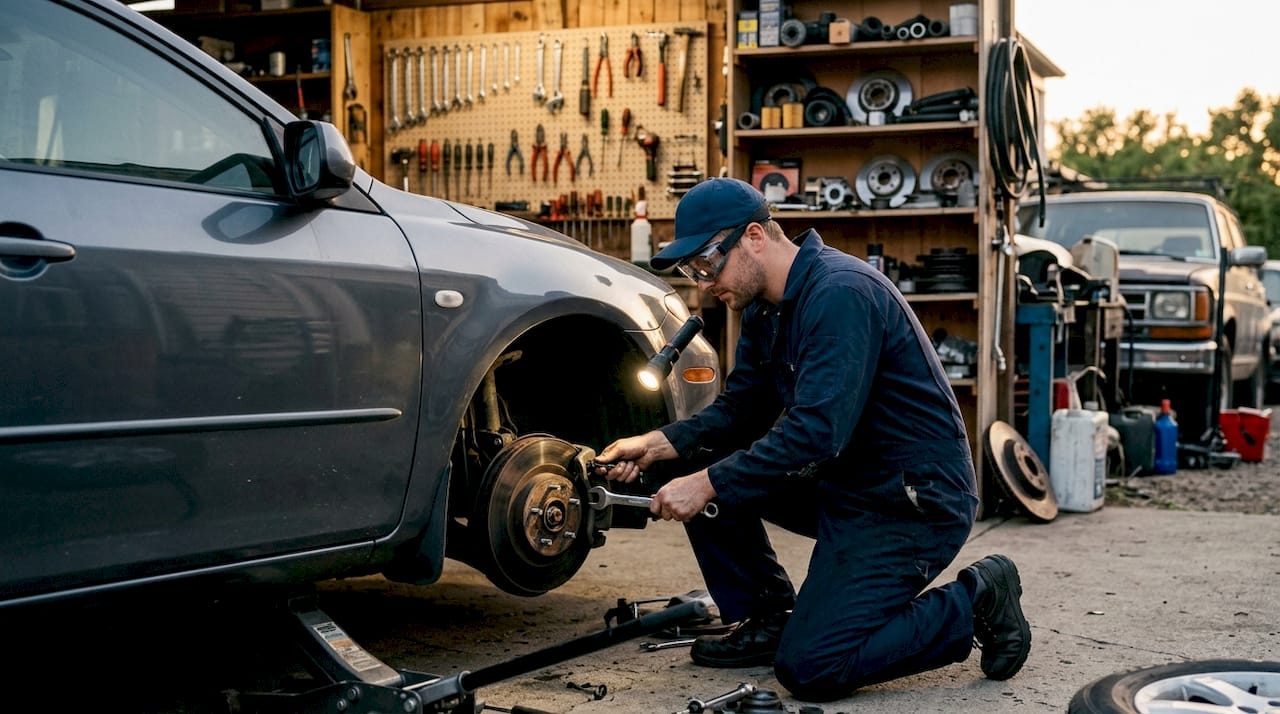
Safety-related defects often carry a lower threshold. Some states require only two failed repair attempts for defects that create an immediate risk of injury or death. If your brakes fail twice and the dealer cannot fix the problem, you may already have a valid claim.
Pro Tip: Always confirm the defect appeared within your warranty period or mileage limit. A defect that surfaces after the coverage window closes is much harder to pursue under lemon law, though product liability claims may still apply.
How does the legal framework support defective vehicle claims?
Three legal theories protect vehicle owners: state lemon laws, the federal Magnuson-Moss Warranty Act, and strict product liability. Each applies differently depending on your situation.
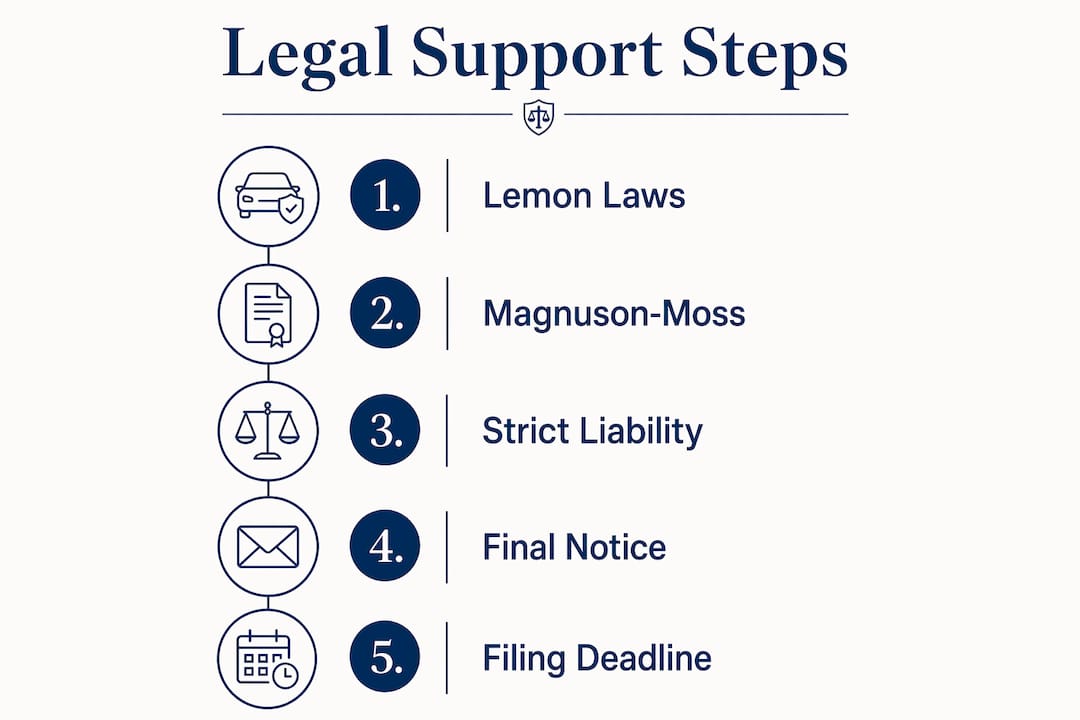
All 50 states plus D.C. have lemon laws, but the definitions, repair attempt thresholds, and available remedies vary significantly. Florida’s lemon law, for example, covers new vehicles within 24 months of delivery. California’s law extends to used vehicles purchased with a dealer warranty. Knowing your state’s specific rules is not optional. It is the foundation of your claim.
The Magnuson-Moss Warranty Act operates alongside state laws and gives consumers the right to sue for breach of written or implied warranties. It also allows successful claimants to recover attorney’s fees, which makes it financially viable to hire legal representation even on smaller claims.
Strict liability is the most powerful legal tool available in vehicle defect cases. Under strict liability, you need only prove the vehicle was defective and caused damage. You do not need to show the manufacturer was careless or negligent. This distinction matters enormously. Proving negligence requires evidence of how the manufacturer behaved internally. Proving a defect exists requires evidence of what the vehicle did. The latter is far easier to establish. For more on how strict liability differs from negligence in Florida auto cases, the distinction shapes your entire legal strategy.
One step most vehicle owners miss is the written final notice. You must send written notice to the manufacturer giving them a last chance to repair the defect, typically within a 10–15 day window, before you can file a formal claim. Skipping this step can delay or invalidate your entire case.
Timing also matters. Failure to file within state-specific limitation periods forfeits your rights. These windows typically range from one to several years depending on the statute and claim type. Do not wait until the defect worsens to act.
Pro Tip: Send your final written notice to the manufacturer by certified mail with return receipt. This creates a dated, verifiable record that you gave proper notice, which is critical if the case goes to arbitration or court.
What practical steps should you take to file a vehicle claim?
Filing a successful claim depends almost entirely on documentation. Courts and arbitrators decide these cases on paper trails, not on what you remember.
Follow these steps in order:
-
Return to an authorized dealer for every repair. Repairs done outside authorized dealerships do not count toward statutory repair attempt thresholds, even if the mechanic uses original parts. Every visit must be to a franchised dealer authorized by the manufacturer.
-
Request and keep your repair orders, not just invoices. Repair orders record your exact complaint as you described it. Invoices only show what the dealer did. If the dealer’s notes minimize your complaint, your repair order is the document that preserves your version of events.
-
Document everything beyond the repair shop. Your documentation should include vehicle identification information, repair dates, specific defect descriptions, all communications with the dealer and manufacturer, and visual evidence such as photos and videos. A short video of the defect occurring is worth more than a written description.
-
Send the written final notice. Once you believe you have met the repair attempt threshold, send a certified letter to the manufacturer’s legal or customer relations department. State the defect, the number of repair attempts, and demand a resolution within the required window.
-
Escalate to arbitration or litigation if needed. Many manufacturers operate arbitration programs. Some states require you to attempt manufacturer-sponsored arbitration before filing suit. If arbitration fails or is unavailable, filing a lawsuit is the next step. An attorney experienced in the compensation process for accident victims can guide you through this escalation efficiently.
The most common mistake at this stage is assuming the dealer is your ally. The dealer works for the manufacturer. Your job is to build a record that speaks for itself.
What are typical outcomes and compensation options?
Successful defective vehicle claims resolve in one of three ways: a vehicle buyback, a replacement vehicle, or a cash settlement. The right outcome depends on your priorities and the strength of your documentation.
Common outcomes for successful claims include buybacks with a full refund of the purchase price, sales tax, registration fees, and finance charges. Some states also require the manufacturer to cover your attorney’s fees. A replacement with a comparable vehicle is another option, though most claimants prefer the buyback because it ends the relationship with the defective vehicle entirely.
Cash settlements are common when the vehicle is older, has higher mileage, or the defect is serious but not catastrophic. Most lemon law cases settle within 90–120 days, with typical buybacks on $35,000 vehicles ranging from $30,000–$38,000 and cash settlements ranging from $5,000–$20,000. Settlement amounts depend on defect severity, vehicle age, and mileage at the time of the claim.
| Outcome type | What you receive | Best suited for |
|---|---|---|
| Vehicle buyback | Full refund of purchase price, taxes, and fees | Newer vehicles with serious defects |
| Replacement vehicle | Comparable new vehicle from the manufacturer | Owners who need a vehicle immediately |
| Cash settlement | Lump sum payment, vehicle retained | Older vehicles or moderate defects |
Legal representation consistently produces higher settlement amounts. Manufacturers know that attorneys understand the statutory requirements and are prepared to litigate. That knowledge shifts the negotiation in your favor before a single demand letter is sent. For context on how product liability claims are structured and what they typically recover, the legal framework applies directly to vehicle defect cases.
Key Takeaways
A defective vehicle claim succeeds when you meet the repair attempt threshold, document every visit with repair orders, send proper written notice, and file within your state’s statute of limitations.
| Point | Details |
|---|---|
| Qualifying defect standard | The defect must affect safety, value, or use and persist after 3–4 authorized repair attempts or 30 days out of service. |
| Authorized repairs only | Only repairs at franchised dealerships count toward lemon law thresholds. Independent mechanic visits do not qualify. |
| Written final notice | Send certified written notice to the manufacturer before filing. Skipping this step can invalidate your claim. |
| Document repair orders | Keep repair orders, not just invoices. They preserve your exact complaint and are critical in disputes. |
| Settlement timelines | Most cases resolve within 90–120 days. Buybacks, replacements, and cash settlements are all possible outcomes. |
What I’ve learned from watching vehicle defect cases go wrong
Jorge here. After years of watching defective vehicle claims succeed and fail, the pattern is almost always the same. The cases that fall apart are not the ones with weak defects. They are the ones with weak paper trails.
The single most overlooked step is the written final notice. Clients come to me after three or four failed repairs, ready to file, and they have never sent the manufacturer a formal letter. That oversight can delay a case by months or kill it entirely. Send the letter before you think you need to.
The second pitfall is independent repairs. I understand the impulse. Your trusted mechanic is cheaper and faster. But repairs outside authorized dealerships simply do not count. Every visit to an independent shop resets nothing and builds nothing for your claim.
My honest advice: treat every dealer visit like a legal proceeding from day one. Read your repair order before you leave the lot. If the complaint description is vague or incomplete, ask the service advisor to correct it. That document is your evidence. Protect it.
Patience and assertiveness are not opposites in this process. You need patience to let the repair attempts accumulate properly. You need assertiveness to send the final notice, meet the deadlines, and push back when the manufacturer stalls. The vehicle owners who get full buybacks are the ones who did both.
— Jorge
Calillaw is ready to help with your vehicle defect case
Dealing with a defective vehicle is stressful enough without having to decode state statutes and manufacturer tactics on your own.

Calillaw’s personal injury practice includes representation for clients whose defective vehicles caused accidents, injuries, or significant financial loss. The firm’s trial attorneys understand both the product liability framework and the insurance dynamics that shape how manufacturers respond to claims. Early legal consultation protects your rights before a critical deadline passes or a procedural misstep weakens your position. If you are dealing with a faulty car and need to understand your options, reach out to Calillaw for a free case evaluation. The earlier you get counsel involved, the stronger your claim will be.
FAQ
What is a defective vehicle claim?
A defective vehicle claim is a legal action seeking compensation when a vehicle has a substantial defect that the manufacturer or dealer cannot fix after a reasonable number of repair attempts. It is formally pursued under state lemon laws, the Magnuson-Moss Warranty Act, or product liability principles.
How many repair attempts do I need before filing?
Most states require 3–4 failed repair attempts for the same defect, or 30 cumulative days out of service within the first 18–24 months or 18,000–24,000 miles. Safety-related defects may qualify after just two failed attempts in some states.
Do independent mechanic repairs count toward lemon law thresholds?
No. Only repairs performed at an authorized dealership count toward statutory thresholds. Visits to independent mechanics, even using original manufacturer parts, do not qualify under lemon law.
What compensation can I expect from a defective vehicle claim?
Successful claims typically result in a full vehicle buyback, a replacement vehicle, or a cash settlement ranging from $5,000–$20,000 depending on defect severity, vehicle age, and mileage. Most cases resolve within 90–120 days.
Do I need a lawyer to file a lemon law claim?
You are not legally required to hire an attorney, but legal representation consistently produces better outcomes. Many state lemon laws require manufacturers to pay your attorney’s fees if you win, making legal help financially accessible even on modest claims.


