 Skip to Content

Florida Crash Report: $12, 10 Day Wait, 48 Hour Download, Legal Tips
Get your official Florida crash report through the FLHSMV Florida Crash Portal, where reports cost $10 plus a small convenience fee. Some reports stay confidential for a restricted period after the crash. If a law enforcement agency responded to your crash, that agency or FLHSMV holds the official record, and either one can point you to the right request channel.
TL;DR:
- Crash reports cost $10 each, plus a $2 convenience fee, and can take up to 10 days to become available online after filing.
- Requests by mail or in person usually take 4 to 6 weeks, but are more reliable for older or extensive reports outside the portal window.
- Full access to crash reports is limited for 60 days following the crash to involved parties, attorneys, insurers, and certain officials; unauthorized disclosure is a felony.
- Download links expire after 48 hours, so reports should be downloaded and saved immediately to avoid losing access.
- Florida law requires law enforcement notification for crashes involving injuries, fatalities, or property damage of $500 or more, but minor crashes can be self-reported online.
Table of Contents
- How to Get a Florida Crash Report Online
- Requesting a Crash Report by Mail or in Person
- Who Can Access a Crash Report in Florida?
- Fees, Timelines, and Download Rules to Know Before You Buy
- When to Call Police vs. File a Self-Report
- What’s Actually in a Florida Crash Report
- What Attorneys Look For When They Read a Crash Report
- How Calil Law Can Help After Your Crash
- Sources
How to Get a Florida Crash Report Online
The Florida Crash Portal is FLHSMV’s official system for buying and downloading crash reports, and for most people, it’s the fastest route to a copy. You’ll need basic details from the crash. Think date, location, and the names of the parties involved, since the system searches its records using that information rather than a case number you might not have yet.
Here’s what the process actually looks like once you’re on the portal:
- Enter the crash date, county, and driver or vehicle information to locate your report.
- Pay the statutory fee of $10 per report, plus a $2 portal convenience fee per transaction.
- Purchase up to 10 reports in a single transaction if you need multiple copies.
- Check your email for the download link immediately after payment clears.
Reports may take up to 10 days to become available in the portal after the responding agency files them, so if you’re searching the day after your crash and coming up empty, that’s normal, not a glitch.
Once your report is ready and purchased, FLHSMV delivers it as a zipped PDF file, and the download link expires 48 hours after it’s issued. Miss that window and you’ll need to repurchase.
Pro Tip: Download and unzip your report the same day you receive the email. A weak Wi-Fi signal or a forgotten browser tab has cost people their $12 purchase more often than you’d think, and FLHSMV won’t reissue a link that’s already expired.
Save the confirmation email and the unzipped PDF to a folder you’ll actually remember, because insurance adjusters and attorneys will likely ask for a copy more than once.
Requesting a Crash Report by Mail or in Person
Mail or in-person requests make sense when the portal doesn’t have your record yet, when you need several older reports at once, or when you’d rather not deal with a login and a payment portal. Here’s how to handle each option.
- Write a signed statement identifying the crash (date, location, parties) for each report you’re requesting.
- Mail your statement with a check or money order payable to “FLHSMV” to FLHSMV Crash Records, 2900 Apalachee Parkway, MS 28, Tallahassee, FL 32399.
- Expect processing to take about 4 to 6 weeks once your request arrives.
- For 10 or fewer reports, consider visiting the nearest Florida Highway Patrol Troop Station instead, since many process small requests on the spot.
Mailed requests are slower, but they’re the more reliable path if your crash happened outside FLHSMV’s typical portal window or if you’re requesting records for someone else with proper authorization.
Who Can Access a Crash Report in Florida?
Florida law restricts who can pull a full crash report during the first 60 days, and understanding this window matters if you’re wondering why your own request got denied or delayed. Florida Statutes §316.066 sets that 60-day confidentiality period specifically to protect personal information before it becomes broadly accessible.
During those 60 days, access is generally limited to:
- The drivers, passengers, and other parties directly involved in the crash.
- Their attorneys or authorized legal representatives.
- Licensed insurance agents and insurers with a legitimate claims interest.
- Victim services advocates and certain government agencies handling the case.
After the 60-day window closes, the report, with any required redactions, typically becomes available to a wider range of requesters.
Florida takes the confidentiality window seriously enough to attach criminal exposure to it: unlawfully obtaining or disclosing confidential crash-report information is a third-degree felony under Florida law, not just a civil violation.
If you’re a researcher rather than a crash-involved party, skip the individual request process entirely and go through FDOT’s aggregate data channels instead, which avoids any privacy conflict from the start.
Fees, Timelines, and Download Rules to Know Before You Buy
Before you pull out a credit card, know the numbers going in. Every crash report through the portal runs $10 per report plus a $2 convenience fee, and a single transaction tops out at 10 reports.
The timing matters just as much as the price. Reports can take up to 10 days to show up in the portal after the agency files them, while mailed requests run 4 to 6 weeks from the day FLHSMV receives your signed statement. Once you buy online, your download link works for exactly 48 hours before it expires, and the file arrives zipped, not as a plain PDF. If you need more than 10 reports, plan on splitting the request into separate transactions rather than assuming the system will let you push through a bulk order.
When to Call Police vs. File a Self-Report
Not every fender bender requires a 911 call, but Florida law draws firm lines around which crashes do. You’re required to notify law enforcement when the crash involves:
- Any injury or fatality, no matter how minor it seems at the scene.
- A hit-and-run driver, impaired driving, or suspected DUI.
- A commercial vehicle or a situation requiring a wrecker to remove a vehicle.
- Apparent property damage of $500 or more.
If your crash falls below those thresholds (a low-speed parking lot bump with no injuries and minimal damage, for instance), you can file a Driver Report of a Traffic Crash directly with FLHSMV by downloading the self-report form and emailing it to SelfReportCrashes@flhsmv.gov or mailing it in. Skipping a required report when the law says you needed one is treated as a noncriminal traffic infraction, so it’s worth five minutes to check which category your crash falls into before you decide to just drive away.
What’s Actually in a Florida Crash Report
A standard Florida crash report follows the format laid out in the Florida Uniform Traffic Crash Form Manual, and it’s more detailed than most people expect. The document breaks into distinct sections:
- An event page covering crash location, time, and roadway conditions.
- A vehicle page listing makes, models, and damage assessments for each car involved.
- A person page identifying drivers, passengers, and witnesses.
- A narrative and diagram where the responding officer describes what happened and sketches vehicle positions.
Insurance adjusters lean on these reports constantly to evaluate claims, and attorneys use them as a starting point for early fact-gathering, particularly when sorting out liability and potential damages. But the report has real limits. Statements an officer records secondhand can face evidentiary restrictions in trial, so the crash report builds your case, but it rarely stands as the only evidence you’ll need.
What Attorneys Look For When They Read a Crash Report
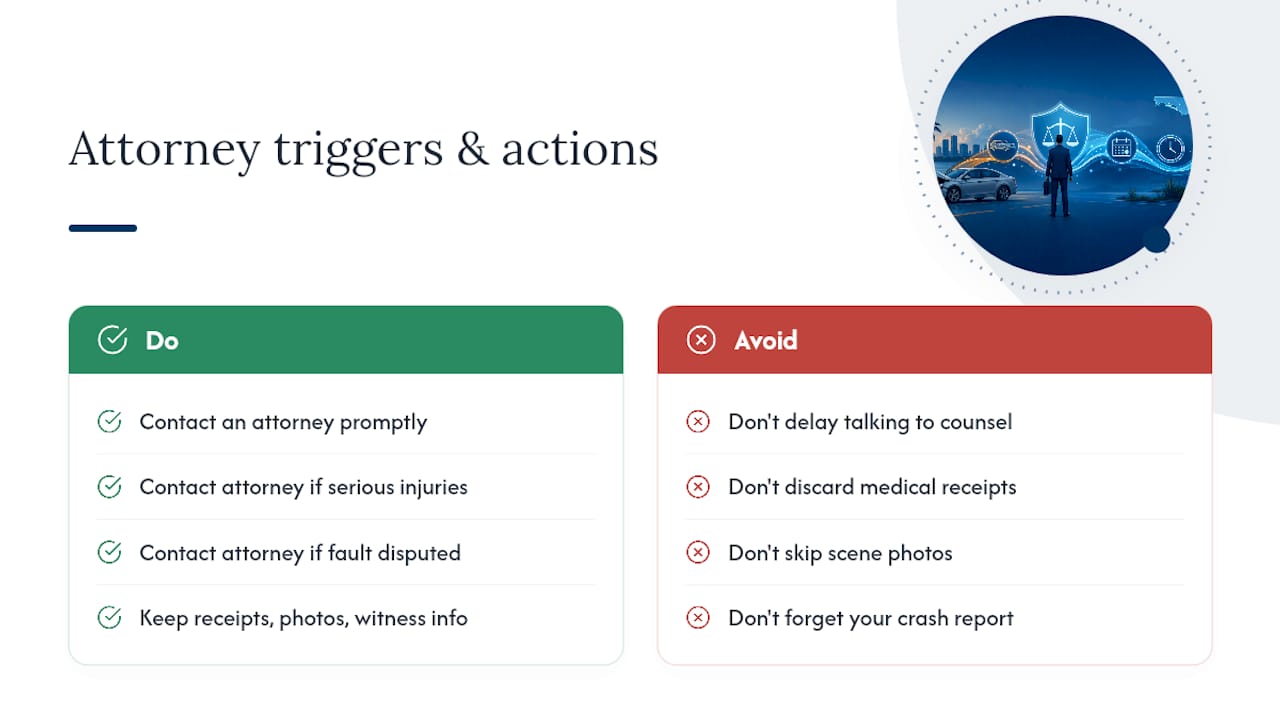
When we review a crash report, we’re not just checking the boxes for names and dates. We’re scanning the officer’s narrative for inconsistencies, checking whether the diagram matches the physical damage described, and cross-referencing insurer information against what our client remembers from the scene.
Certain patterns tend to signal it’s worth talking to an attorney sooner rather than later: serious injuries, disputed fault between drivers, an uninsured or underinsured driver on the other side, or a liability picture that’s genuinely murky. If any of that sounds like your situation, hold onto your medical receipts, take photos of the vehicles and scene if you haven’t already, and jot down witness contact information before memories fade. Bring all of it, along with your crash report, to your first consultation.
— Jorge
How Calil Law Can Help After Your Crash
Consider consulting a law firm experienced in Florida personal injury and motor vehicle collision claims on a contingency fee basis, meaning no upfront payment and fees collected only if a settlement or verdict is recovered.
Before your consultation, gather your crash report, any medical records or bills, photos of the vehicles and injuries, and contact information for witnesses. That paperwork lets us evaluate your personal injury claim quickly and tell you honestly where you stand. Visit our personal injury practice page to see how we handle motor vehicle cases, or reach out directly through Calil Law to schedule a free consultation and find out what your case is actually worth.
This article is general information, not a substitute for advice from a qualified lawyer. Consult a qualified legal professional about your own circumstances before acting on anything here.
Sources
- Traffic Crash Reports – Florida Department of Highway Safety and Motor Vehicles
- Florida Statutes §316.066 — Crash reports access and confidentiality


