 Skip to Content
Preserve Evidence After a Crash: Graves Amendment in Florida
The Graves Amendment usually shields Florida rental and leasing companies from being sued just because they own the car involved in your crash. The federal law, codified at 49 U.S.C. § 30106, preempts Florida’s old vicarious liability rules for lessors who aren’t themselves negligent or criminally at fault. But it isn’t absolute immunity. If the rental company failed to maintain the vehicle, knowingly rented to an unfit driver, or skipped required insurance coverage, you may still have a claim.
TL;DR:
- The Graves Amendment preempts vicarious liability for rental companies in Florida unless they failed in maintenance, rented to unfit drivers, or lacked required insurance coverage.
- The federal law applies only to commercial lessors engaged in renting vehicles, leaving personal owners or casual lenders outside its scope.
- Rental companies can still face liability if they were negligent in maintenance, entrusted the vehicle to an unfit driver, or committed criminal acts.
- Florida’s dangerous instrumentality doctrine no longer automatically holds rental companies liable for crashes if federal law applies, but individual owners may still be liable.
- Prompt investigation, including requesting maintenance logs and rental agreements, is crucial to counter potential Graves Amendment defenses and hold rental companies accountable.
Table of Contents
- What the Graves Amendment Says About Rental Car Liability
- How Graves Preempted Florida’s Vicarious Liability Rules
- When the Rental Company Can Still Be Held Liable
- Who to Sue and What to Do After a Rental Car Crash in Florida
- How Calil Law Approaches Graves Amendment Cases
- What Graves Really Means for Florida Claimants
- When to Contact Calil Law After a Rental Car Crash
- Sources
- FAQ
What the Graves Amendment Says About Rental Car Liability
Congress passed the Graves Amendment in 2005 to stop lawsuits that held rental and leasing companies liable for crashes purely because their name was on the title. Before that, states like Florida let injured people sue the vehicle’s owner under theories that didn’t require proving the owner did anything wrong.
Under 49 U.S.C. § 30106, two conditions have to be true for a rental company to claim the shield. The company has to be “engaged in the trade or business of renting or leasing motor vehicles,” and there can be no negligence or criminal wrongdoing on the owner’s part during the rental period. Miss either condition, and the protection disappears.
The statute also carries a savings clause that matters for Florida claimants. Subsection (b) preserves state laws requiring financial responsibility or insurance coverage, meaning Florida can still force rental companies to carry minimum liability insurance even though it can’t hold them vicariously liable for the driver’s negligence.
Courts examine a few practical triggers when deciding if Graves applies:
- Whether the transaction was a genuine commercial rental with a rental agreement and fee, not a casual loan.
- Whether the vehicle was within the agreed rental period when the crash happened.
- Whether the owner’s own conduct, not just the driver’s, contributed to the injury.
How Graves Preempted Florida’s Vicarious Liability Rules
Florida used to be one of the toughest states for rental companies to operate in because of its dangerous instrumentality doctrine. That rule treated a car as inherently dangerous and made the owner automatically liable for how it was driven, even with zero fault of their own. Rental companies in Florida faced real exposure under Florida Statutes § 324.021, which set liability caps for short-term lessors but still let injured parties sue the leasing company directly.
Graves changed that landscape. The Florida Supreme Court addressed the conflict directly in the Rosado opinion, tied to litigation involving Vargas and Enterprise Leasing Co., and held that federal law preempts the state statute’s vicarious liability provisions for short-term lessors. The court’s reasoning followed the Supremacy Clause: when a valid federal law directly conflicts with a state law governing the same conduct, the federal rule wins.
A few takeaways from that line of cases matter for anyone filing a Florida claim today:
- Rental companies are generally not vicariously liable simply for owning the vehicle involved in your crash.
- Florida’s dangerous instrumentality doctrine still applies to individual owners who lend their personal car to a friend or family member.
- The preemption applies specifically to commercial lessors meeting the Graves definition, not to every vehicle owner in the state.
This shift, discussed at length in the University of Florida Law Review’s analysis, represents a real narrowing of who an injured Florida driver can pursue.
When the Rental Company Can Still Be Held Liable
Graves protects rental companies from vicarious liability, not from their own bad conduct. If the lessor’s own negligence contributed to your crash, the shield doesn’t apply, and you can build a direct claim against the company itself.
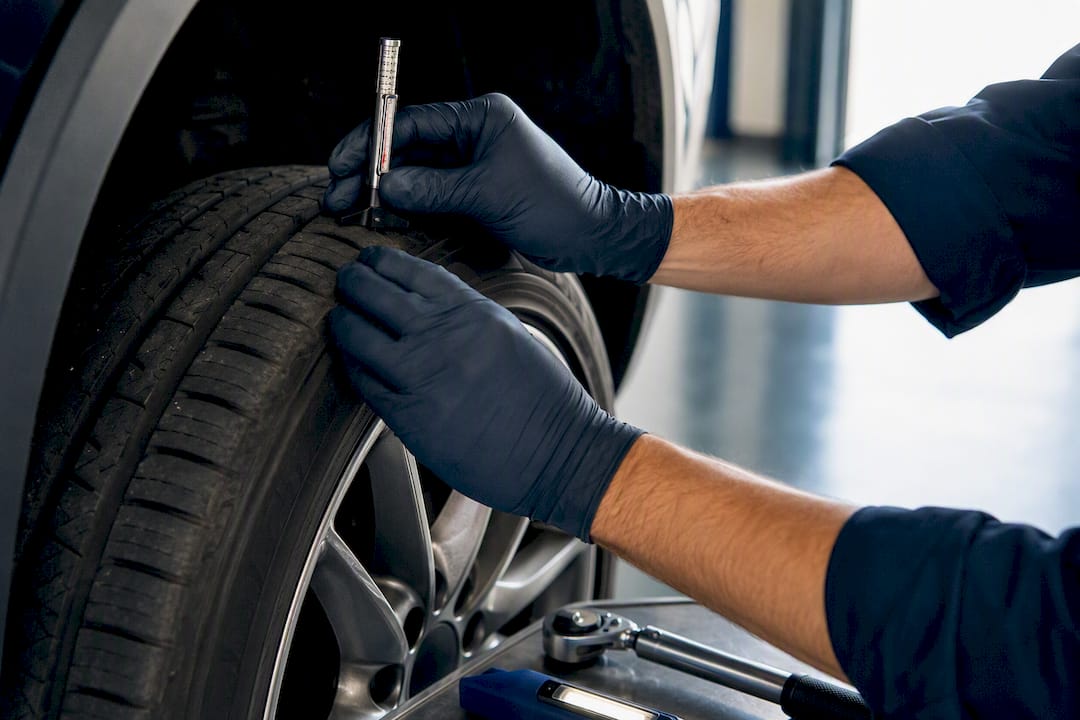
- Negligent maintenance. If the rental company knew about a brake problem, a bald tire, or a check-engine warning and rented the car out anyway, that failure to inspect or repair is the company’s own negligence, separate from anything the driver did wrong.
- Negligent entrustment. Renting to someone the company knew or should have known was unfit, because of a suspended license, a documented pattern of reckless driving, or visible intoxication at the counter, can defeat the Graves defense entirely.
- Criminal wrongdoing. If an employee or the company itself engaged in criminal conduct connected to the rental, the statute’s protection evaporates outright.
- Insurance shortfalls. Because § 30106(b) preserves Florida’s financial-responsibility laws, a lessor that failed to carry required coverage can face exposure the federal shield never intended to erase.
Proving any of these takes documentary evidence, not assumptions. Maintenance logs, employee screening records, and rental-counter paperwork often decide whether a case against the lessor survives a motion to dismiss.
Pro Tip: Request the rental company’s maintenance and inspection records early through a formal written request or subpoena. Companies routinely purge these files on a schedule, and once they’re gone, so is your best evidence of negligent maintenance.
Who to Sue and What to Do After a Rental Car Crash in Florida
Your first target after a rental car accident is almost always the at-fault driver, and their liability insurance is where most compensation comes from. If that driver was working within the scope of employment, for a delivery service or rideshare company, for instance, their employer may also be liable. The rental company itself only becomes a viable defendant when you can show its own negligence under one of the exceptions above.
Insurance coverage gets complicated fast. Florida’s no-fault system means your own PIP coverage pays initial medical bills regardless of fault, but serious injuries push you into the at-fault driver’s bodily injury liability policy. If that driver is underinsured or uninsured, your own uninsured motorist coverage becomes critical.
Take these steps as soon as possible after the crash:
- File a police report and get the report number for insurance and legal purposes.
- Seek medical care immediately, even for injuries that seem minor at first.
- Photograph the vehicles, the scene, and any visible mechanical defects.
- Request a copy of the rental agreement and any available inspection records.
- Preserve texts, emails, or recorded calls with the rental company or insurer.
Florida gives injured parties a limited window to file a claim, and that clock doesn’t pause while you wait to see how your injuries develop. Waiting too long to involve an attorney is one of the most common reasons claimants lose leverage against well-insured rental companies and their legal teams.
How Calil Law Approaches Graves Amendment Cases
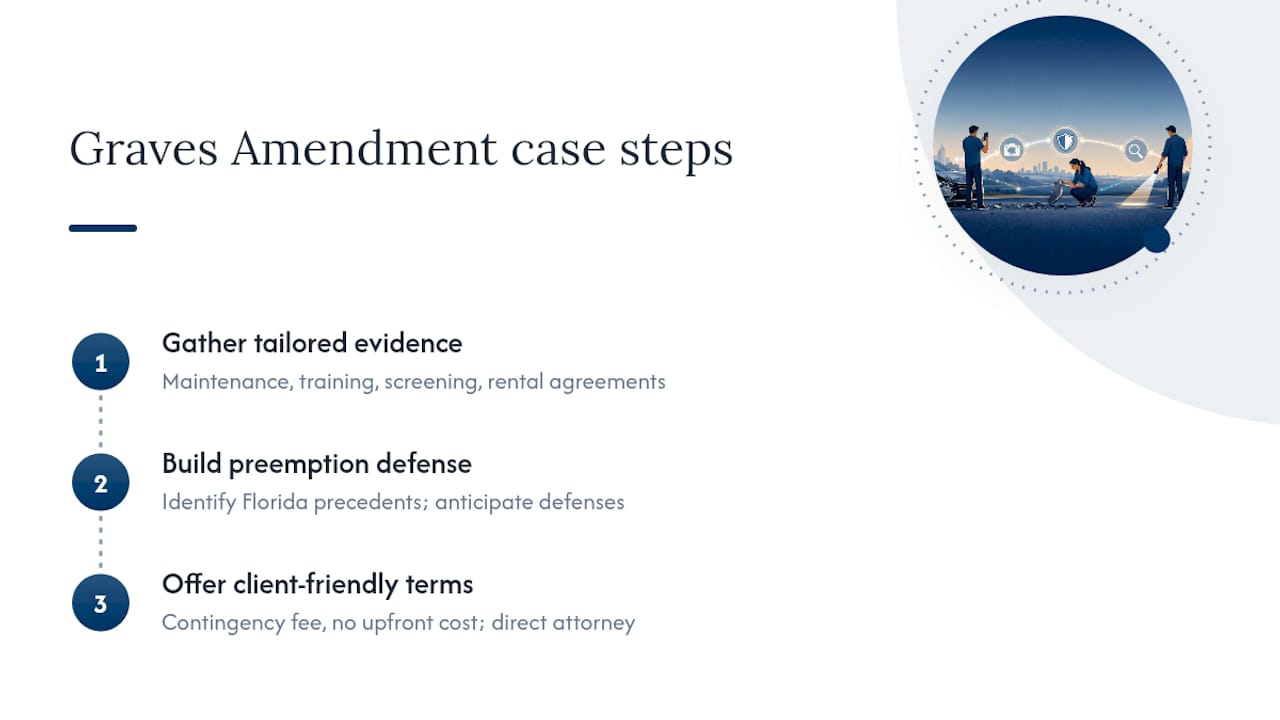
Rental car cases involving the Graves Amendment demand more than a demand letter. Some law firms build these claims the way trial lawyers build every case: by gathering the specific proof that defeats a federal preemption defense before the insurance company ever sees a lawsuit.
That means pulling maintenance logs, employee training and screening files, and full rental agreements to establish negligent maintenance or negligent entrustment. It means knowing which Florida precedents apply and which arguments a rental company’s counsel will raise first. Some firms represent injured clients on a contingency fee basis, so there’s no upfront cost, and clients get direct access to the attorney handling their case rather than a rotating cast of case managers.
What Graves Really Means for Florida Claimants
Federal preemption didn’t close the door on rental car claims. It narrowed the hallway and put a spotlight on the facts. Cases that once won on the theory that ownership equals responsibility now hinge on whether the rental company itself cut a corner.
That shift favors claimants who move fast and lawyers who know where to look, in maintenance files, screening records, insurance filings, not just the police report. Expect more fights ahead over peer-to-peer car sharing platforms and dealership loaners, where “engaged in the business of renting” isn’t always obvious. Good factual investigation, not clever legal theory, decides these cases now.
— Jorge
When to Contact Calil Law After a Rental Car Crash
Some rental car crashes are straightforward insurance claims. Others aren’t, especially when you’re seriously injured, the insurer is disputing fault, or the facts point toward negligent maintenance or negligent entrustment by the rental company itself. Those cases require someone who knows how to build a record that survives a Graves Amendment defense, not just file paperwork.
Some law offices handle these claims on a contingency fee basis, so clients pay nothing upfront and nothing at all unless compensation is recovered. Attorneys collect maintenance records, rental agreements, and screening files that determine whether a rental company can be held directly responsible, and prepare every case as if it’s headed to trial because insurers negotiate differently when they know the client is ready to go the distance. If a rental car crash left you hurt, get in touch with our personal injury team for a free consultation and find out what your case is really worth.
Sources
For readers who want to go straight to the primary material:
- 49 U.S.C. § 30106 – Rented or leased motor vehicle safety and responsibility (Cornell LII)
- Florida Supreme Court opinion (Rosado / SC09-390)
- The Graves Amendment: Putting to Death Florida’s Strict Vicarious Liability Law (University of Florida Law Review)
This article is general information, not a substitute for advice from a qualified lawyer. Consult a qualified legal professional about your own circumstances before acting on anything here.
FAQ
Does the Graves Amendment Mean I Can Never Sue a Rental Company in Florida?
No. It blocks vicarious liability claims based purely on vehicle ownership, but you can still sue a rental company directly for its own negligence, such as negligent maintenance or negligent entrustment. Florida’s insurance requirements under § 30106(b) also remain enforceable regardless of Graves.
Is It Illegal to Drive a Deceased Person’s Car in Florida?
Driving a deceased person’s car isn’t automatically illegal, but the vehicle’s title, insurance, and registration need to be handled through the estate process. Insurance coverage can become complicated if the policy lapses or the named insured has passed away, which is a separate issue from Graves Amendment liability questions involving rental vehicles.
What Is the 51% Rule in Florida?
This refers to comparative negligence, not the Graves Amendment.
How Long Do I Have to File a Claim After a Rental Car Accident in Florida?
Florida’s statute of limitations for most negligence claims runs from the date of the crash, and waiting too long can jeopardize your case. Evidence like maintenance records and rental agreements also becomes harder to obtain the longer you wait, which is why early legal help matters in Graves Amendment cases.
Can I Still Sue the Driver Even If the Rental Company Is Protected?
Yes. Graves Amendment protection applies only to the rental or leasing company, not the driver who caused the crash. The at-fault driver remains fully liable for their own negligence, and their insurance policy is typically the first source of recovery.


