 Skip to Content

US Injury Claims: 5 Questions to Choose Mediation or Arbitration
Mediation is a voluntary negotiation that keeps decision-making power with you and the other party, while arbitration hands that power to a neutral decision-maker who issues a binding award. Choose mediation when you want to preserve a relationship or keep terms private. Choose arbitration when you need a final, enforceable outcome or a decision-maker with specialized expertise.
TL;DR:
- Mediation typically results in a non-binding settlement agreement that only stands if both parties agree and sign it, making control more flexible.
- Arbitration provides a final, enforceable decision issued by a neutral expert, with limited scope for appeal and often higher costs and longer timelines.
- Mediation involves informal proceedings with little discovery, while arbitration features structured hearings and some formal discovery, but usually less than court trials.
- Contract clauses often require parties to attempt mediation first before escalating to arbitration or litigation, with strict procedural steps for compliance.
- Preparation for mediation includes developing a realistic settlement range, while arbitration emphasizes gathering admissible evidence and briefing witnesses for a hearing.
Table of Contents
- Mediation vs. Arbitration: A Side-By-Side Comparison
- What Is Mediation, and How Does the Process Work?
- What Is Arbitration, and What Does It Decide?
- How Do You Decide Between Mediation and Arbitration?
- What Are Med-Arb and Multi-Tier Dispute Clauses?
- How Should You Prepare for Mediation or Arbitration?
- How Final Is an Arbitration Award, and What Happens to a Mediated Deal?
- When Does Calillaw Recommend Mediation Over Arbitration?
- How Calillaw Helps You Navigate Mediation, Arbitration, or Trial
- Where to Read More on Mediation and Arbitration
- Sources
Mediation vs. Arbitration: A Side-By-Side Comparison
The two processes solve different problems, and the differences show up in every stage of a dispute.
- Outcome: Mediation produces a settlement agreement only if both sides agree to sign one. Arbitration produces an award, issued by the arbitrator whether or not either side likes it.
- Control: In mediation, you and the other party keep the pen. In arbitration, the arbitrator decides, much like a judge in a private trial.
- Formality: Mediation is informal and conversational. Arbitration follows structured procedure, closer to litigation but without a jury.
- Cost and timeline: Mediation is generally quicker and less expensive, often wrapped up in a single session. Arbitration can stretch over months once you factor in discovery, hearings, and scheduling.
- Discovery: Mediation involves little to no formal discovery. Arbitration allows some, but it’s typically narrower than in court.
- Confidentiality: Both processes are generally private, but mediation’s informality makes candid disclosure easier.
- Appealability: A mediated settlement can be enforced as a contract. An arbitration award is nearly final, with only narrow grounds for court review.
Parties usually pick mediation first to test whether a deal is possible, then move to arbitration or litigation only if talks stall.
What Is Mediation, and How Does the Process Work?
Mediation puts a neutral third party in the room, but that person never decides your case. A mediator facilitates negotiation between you and the other side, helping surface common ground without ruling on who’s right. Mediators often come from legal, business, or specialized industry backgrounds, and many hold formal training or certification tracked by U.S. labor statistics.
A typical session opens with both sides in the same room, then splits into private caucuses where the mediator shuttles offers back and forth. If momentum builds, the session ends with a written settlement agreement. That agreement only becomes binding once both parties sign it.
Sessions usually run a half-day or full day, though complex commercial disputes can take longer. Costs stay modest compared to arbitration or trial.
- Preserves control over the outcome
- Keeps details confidential
- Allows creative solutions courts can’t order, like payment plans or apology terms
- Carries no guarantee of resolution
- Can struggle when one party holds significant leverage over the other
Pro Tip: Walk into mediation with a real settlement number in mind, not just a wish list. Mediators respond faster when they sense you’ve already done the math.
What Is Arbitration, and What Does It Decide?
Arbitration functions like a private trial. You and the other party select an arbitrator, or a panel of three for larger disputes, often chosen for subject-matter expertise in construction, insurance, or securities matters. Once selected, the case moves through pleadings, a limited discovery period, a hearing where both sides present evidence, and finally a written award.
That award can be binding or nonbinding, depending on your contract or agreement. A binding arbitration award is enforceable under federal law, with courts stepping in to overturn it only in narrow circumstances.
- Delivers a final, enforceable resolution without a jury trial
- Puts a subject-matter expert in the decision-making seat
- Keeps proceedings out of the public record
- Limits your right to appeal, even when you believe the arbitrator got it wrong
- Can involve real costs, including arbitrator fees split between parties
- Restricts discovery, which matters if your case depends on documents held by the other side
FINRA arbitration, used heavily in securities disputes, follows this same basic structure with industry-specific rules layered on top.
How Do You Decide Between Mediation and Arbitration?
Start with your goal, not the process. If you need a durable business relationship to survive the dispute, mediation gives you room to negotiate terms a court never would. If you need a decision that sticks, whether the other side likes it or not, arbitration gets you there faster than litigation and with far more privacy.
- Ask what you actually need: a resolved relationship or a final ruling?
- Assess your discovery needs. Complex fraud or multi-party liability claims often require the broader discovery that arbitration limits.
- Consider appeal rights. If legal error or precedent matters to your case, weigh arbitration’s finality carefully before agreeing to it.
- Check your contract. Many agreements already dictate mediation, arbitration, or both, in sequence.
- Ask the neutral pointed questions: their background, fee structure, expected timeline, and confidentiality terms.
Pro Tip: Before signing off on either process, ask your attorney one direct question: “If we lose, can we still fix this?” The answer changes everything about how hard you should push for a settlement now.
What Are Med-Arb and Multi-Tier Dispute Clauses?
Many contracts now build in a mediation-first requirement before either side can file for arbitration or a lawsuit. This structure, sometimes called med-arb, forces good-faith settlement talks before escalating. Pre-lawsuit mediation clauses are increasingly standard in commercial and insurance contracts.
- Follow the contract’s stated timeline for initiating mediation
- Select a neutral according to the clause’s selection process, not by default
- Document your compliance in writing if the other side later disputes it
- If the other side refuses to mediate, notify your attorney immediately. Courts can compel compliance with a mandatory ADR clause before allowing a case to proceed.
How Should You Prepare for Mediation or Arbitration?
Preparation looks different depending on which process you’re heading into, but both reward parties who show up organized.
- Gather medical records, repair estimates, correspondence, and any documentation proving damages.
- For mediation, prepare a short opening statement, a realistic settlement range, and clear authority limits you’re willing to reserve until the right moment.
- For arbitration, prioritize the evidence you’ll actually need at hearing. Discovery windows are tight, so admissible proof matters more than volume.
- Prep witnesses early, especially for arbitration hearings where testimony carries more weight than in informal mediation.
- Brief your attorney on your priorities before either process starts. If they know what outcome actually matters to you, they can negotiate or argue accordingly.
How Final Is an Arbitration Award, and What Happens to a Mediated Deal?
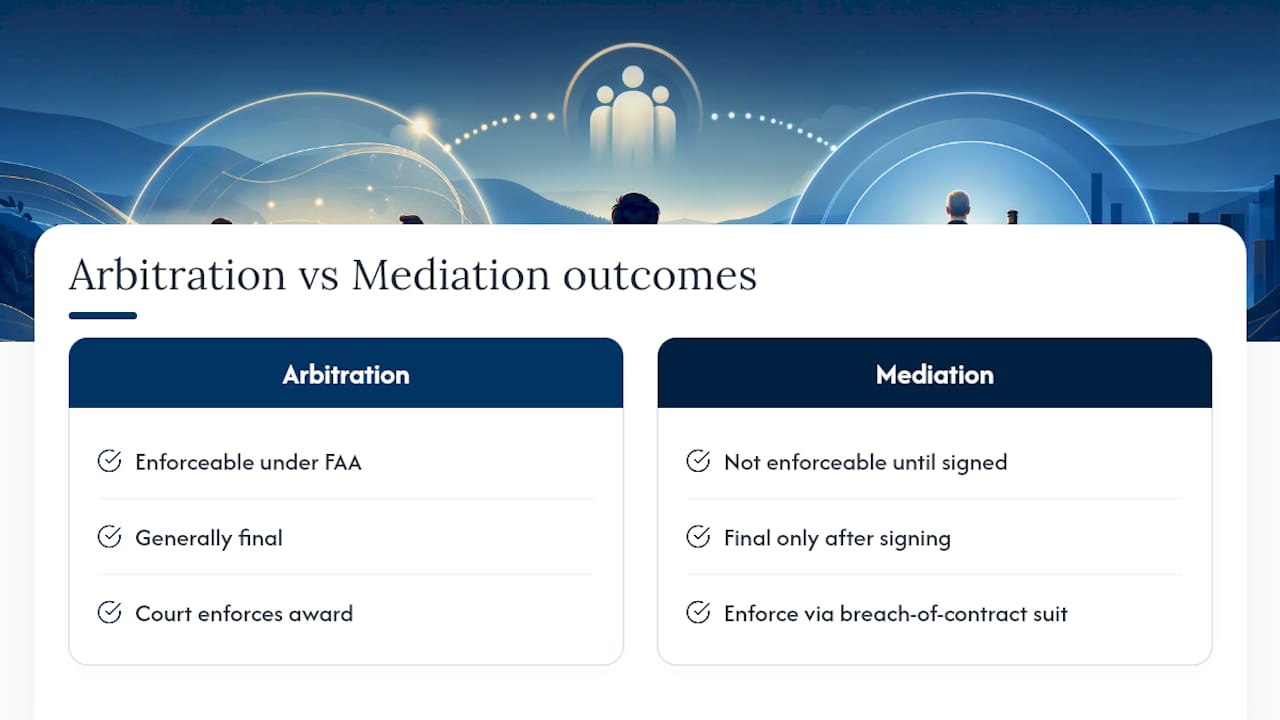
Arbitration awards are enforceable under the Federal Arbitration Act, and courts vacate them only for narrow reasons: fraud, evident partiality by the arbitrator, or the arbitrator exceeding their authority. Outside those exceptions, the award stands.
A mediated settlement works differently. It has no force until both parties sign it, but once signed, it becomes an enforceable contract. If the other side breaches it, you sue for breach of that agreement, not the original dispute. That distinction shapes which process makes sense when finality matters most.
When Does Calillaw Recommend Mediation Over Arbitration?
We generally push clients toward mediation first. It costs less, moves faster, and tests whether a fair number exists without giving up your right to litigate if it doesn’t. We turn to arbitration when a contract requires it or when a case needs a specialized decision-maker and a final answer. Either way, get counsel involved before you agree to anything in writing.
— Jorge
How Calillaw Helps You Navigate Mediation, Arbitration, or Trial
Deciding between mediation and arbitration gets harder when real money, medical bills, or a denied insurance claim are on the line. Calillaw represents clients through every stage of that decision, from settlement negotiations to arbitration hearings to trial when a fair resolution isn’t on the table.

If you’re weighing your options after a car accident, a slip and fall, or a denied insurance claim, our attorneys can walk you through what a personal injury claim actually involves and where mediation or arbitration might fit into your case. For a broader look at how settlement stacks up against going to trial, our guide on settlement versus trial breaks down the tradeoffs in plain terms. Request a case review with Calil Law Trial Attorneys, and we’ll tell you straight whether your dispute calls for a negotiated settlement or a fight worth taking all the way to verdict.
Where to Read More on Mediation and Arbitration
For deeper reading, Cornell Law’s arbitration overview, the Program on Negotiation’s ADR guide, and your state court’s ADR rules are solid starting points. Always confirm state-specific requirements with a licensed attorney.
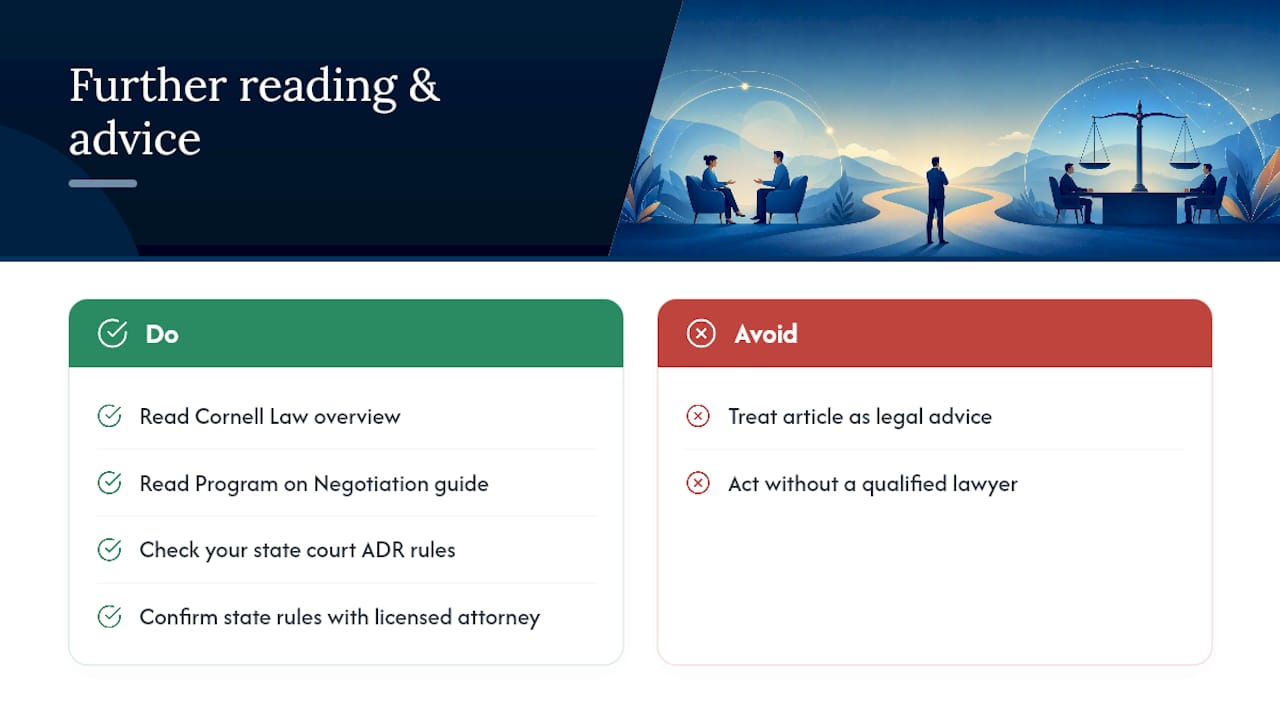
This article is general information, not a substitute for advice from a qualified lawyer. Consult a qualified legal professional about your own circumstances before acting on anything here.
Sources
- Cornell Law — Mediation
- North Carolina Courts — Arbitration and mediation
- FindLaw — Mediation vs. Arbitration vs. Litigation
- FindLaw — Arbitration v. Litigation in Court


