 Skip to Content

U.S. Injury: Present Value and Legal Steps for Structured vs Lump Sum
There is no universal winner between a structured settlement and a lump sum. Structured settlements tend to fit people who need guaranteed, tax-free income for long-term care or lifetime medical needs, while a lump sum tends to serve someone with urgent debts, a specific investment plan, or a short recovery timeline. The tax advantage under IRC §104 shapes both paths, and the right choice usually comes down to present-value math and how the money will actually get used.
TL;DR:
- Structured settlements are most advantageous for individuals with long-term, predictable medical needs due to their guaranteed, tax-free income and protection from impulsive spending.
- Lump sums offer immediate control and flexibility but pose risks of poor investment, higher tax on growth, and potential disqualification from means-tested benefits.
- Present-value calculations using current interest rates critically influence whether a lump sum or structured settlement is financially preferable, especially in low-rate environments.
- State laws and court reviews heavily regulate transfer of future payments, while structured settlements may protect against creditor claims better than lump sums.
- Hybrid arrangements combining lump sum and structured payments often provide a balanced approach, especially when medical costs are uncertain or immediate cash is needed.
Table of Contents
- Structured Settlement vs Lump Sum: How Each One Pays You
- Structured Settlement Terms and Tax Rules You Need to Know
- Structured Settlement Pros and Cons for Injury Victims
- What a Lump Sum Settlement Actually Means
- Lump Sum Payment Pros and Cons
- Comparing Offers: A Present-Value Checklist
- How Calil Law Protects Clients Through the Settlement Decision
- The Psychology Behind Choosing a Payout Structure
- Creditors, Liens, and Who Else Has a Claim on Your Settlement
- An Editorial Take on Getting This Decision Right
- How Calil Law Helps You Evaluate a Settlement Offer
- Sources
Structured Settlement vs Lump Sum: How Each One Pays You
A structured settlement pays your compensation over time through an annuity, usually funded through a qualified assignment where the defendant’s insurer transfers the payment obligation to a third-party company. That company buys an annuity contract designed to match your agreed schedule. A lump sum, by contrast, delivers the entire settlement or verdict amount in one payment, deposited into your account (or your attorney’s trust account) shortly after the case resolves.
Structured settlement payment schedules vary depending on what you and your attorney negotiate:
- Fixed monthly payments for a set number of years
- Lifetime payments that continue until death, sometimes with a guaranteed minimum period
- Lump milestone payments timed to future events, like college tuition or anticipated surgeries
- A combination schedule, mixing monthly income with periodic lump payments for major expenses
Both structures start from the same settlement or jury award. What differs is how, and how fast, you get access to it.
Structured Settlement Terms and Tax Rules You Need to Know
Under IRC §104(a)(2), structured settlement payments arising from physical injury claims are generally exempt from federal income tax, and the investment growth inside the annuity stays tax-free too. That exemption is one of the strongest financial arguments for structuring at least part of a large settlement.
The Department of Justice’s overview of structured settlements explains the qualified assignment process: the defendant or insurer transfers payment responsibility to an assignment company, which then purchases an annuity from a life insurer to fund your schedule. Most states also enforce Structured Settlement Protection Acts, which require court approval and financial disclosure before anyone can buy out or transfer your future payments.
Quick fact: Once a structured settlement is finalized, changing the schedule almost always requires either a cost-of-living adjustment (COLA) rider negotiated up front or a court-approved transfer, since federal rules restrict informal commutation.
- IRC §104(a)(2) tax exemption applies to the original payments and annuity growth
- Qualified assignment shifts the payment obligation to a licensed assignment company
- State Structured Settlement Protection Acts require disclosure and often court review for transfers
- COLA riders can be built in at the start, but rarely added later
Structured Settlement Pros and Cons for Injury Victims
Structured settlements work best when the injury creates lasting financial need, but they come with real tradeoffs.
- Guaranteed, tax-free income. You know exactly what arrives and when, without worrying about market swings eating into it.
- Built-in overspending protection. Because you can’t access the full sum at once, structured payments guard against impulsive spending and reduce exposure to certain creditors.
- Benefit preservation. When structured properly with a special needs trust or the right payment design, structured settlements can help protect Medicaid and SSI eligibility that a lump sum might jeopardize.
- Inflation exposure. Fixed payments lose purchasing power over decades unless a COLA rider is negotiated, and that rider usually reduces the starting payment amount.
- Illiquidity. If a real emergency hits, you can’t simply withdraw extra funds. Selling future payments to a factoring company is possible but costly, which the next section covers in detail.
Pro Tip: If your injury involves lifelong care needs, ask your attorney to model a structured payment stream against your projected medical cost inflation, not just today’s expenses.
Catastrophic injuries, spinal cord damage, traumatic brain injury, and cases involving lifetime attendant care are where structured settlements are most commonly recommended, precisely because the guaranteed income matches a guaranteed, ongoing need.
What a Lump Sum Settlement Actually Means
Taking a lump sum means the full award lands in your account at once, giving you immediate control. That flexibility matters when you have outstanding medical bills, need to modify a home or vehicle for a disability, or want to pay off high-interest debt right away.
The injury portion of your award is generally not taxed, but any investment returns you earn afterward are taxable income. That distinction trips people up constantly.
- Immediate access to pay debts, home modifications, or urgent family needs
- The original injury award itself is untaxed; growth from investing it is not
- Family and social pressure to spend or lend money increases once a large deposit appears
- A large lump sum can disqualify you from Medicaid or SSI if not handled with proper planning
Lump Sum Payment Pros and Cons
A lump sum rewards discipline and punishes poor timing, so weighing the upside against the risk matters more here than with structured payments.
- Full control and flexibility. You can invest, pay off debt, buy a home, or start a business immediately, without waiting on a payment schedule.
- Opportunity for growth. A disciplined investor in a strong market can outperform what an annuity would have paid.
- Sequence-of-returns risk. If poor investment returns hit early, especially right after receiving the money, that risk can permanently shrink your remaining balance even if markets recover later.
- Documented regret. Industry surveys, including MetLife data summarized by Investopedia, show many lump-sum recipients later wish they had chosen an annuity or a hybrid plan, while structured settlement recipients report higher satisfaction and financial security.
- Benefit and tax complications. Investment gains get taxed, and an unprotected lump sum can trigger Medicaid or SSI disqualification the same way an unplanned inheritance would.
A hybrid settlement, part lump sum for immediate needs and part structured for long-term security, often resolves this tension better than picking one extreme. Attorneys frequently steer clients toward this middle path once the numbers are on the table.
Comparing Offers: A Present-Value Checklist
Comparing a structured offer to a lump offer requires more than looking at the total number on each proposal. You need to know what the structured payments are actually worth today, in today’s dollars, and stack that against the lump offer you’re being handed.
Start by mapping out your real financial picture:
- Immediate cash needs: medical debt, lost wages, home or vehicle modifications
- Future care costs: projected medical, therapy, or attendant care expenses over your expected lifespan
- Life expectancy and how it affects a lifetime payment schedule
- Whether you rely on or plan to rely on Medicaid, SSI, or other means-tested benefits
Once you have those numbers, present value comes into play. Present value calculates what a future stream of payments is worth right now, using a discount rate, typically shown as a range like 3% to 6% in legal settlement comparisons, since the result is highly sensitive to which rate you pick. A lower rate makes future payments look more valuable today; a higher rate favors the lump sum. This is also why structured settlements tend to look more attractive when interest rates are low, and less attractive when safe rates climb.
Pro Tip: Ask any company proposing to buy your structured payments for the exact discount rate they’re applying. If they won’t give you a straight number, treat that as a red flag, not a negotiating tactic.
Bring both offers to a fiduciary financial advisor, a CFP or CFA, along with your attorney, before signing anything. Watch for factoring offers that arrive uninvited, undisclosed fees buried in transfer paperwork, and any pressure to skip court approval where your state requires it.
How Calil Law Protects Clients Through the Settlement Decision
Life-care plans, present-value schedules, and specific negotiation points on annuity terms are typically prepared before any structured offer is signed. That means comparing the insurer’s proposed schedule against realistic medical cost projections, not just the number on the page.
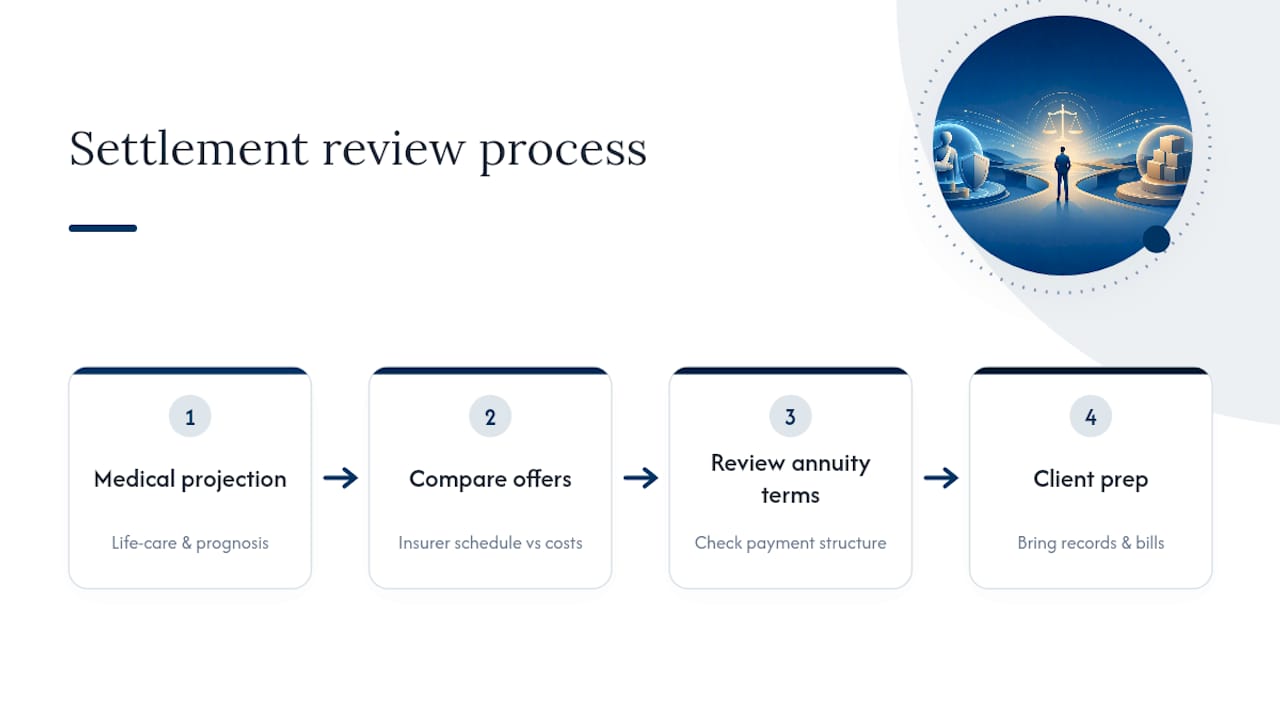
Coordination often occurs with financial advisors and medical specialists to help ensure the settlement structure aligns with prognosis and budget. When a factoring company contacts a client with a buyout offer, as the CFPB has repeatedly warned happens with aggressive discounting, we review the terms before you respond. Bring your medical records, current bills, and any settlement paperwork you’ve already received to your consultation.
The Psychology Behind Choosing a Payout Structure
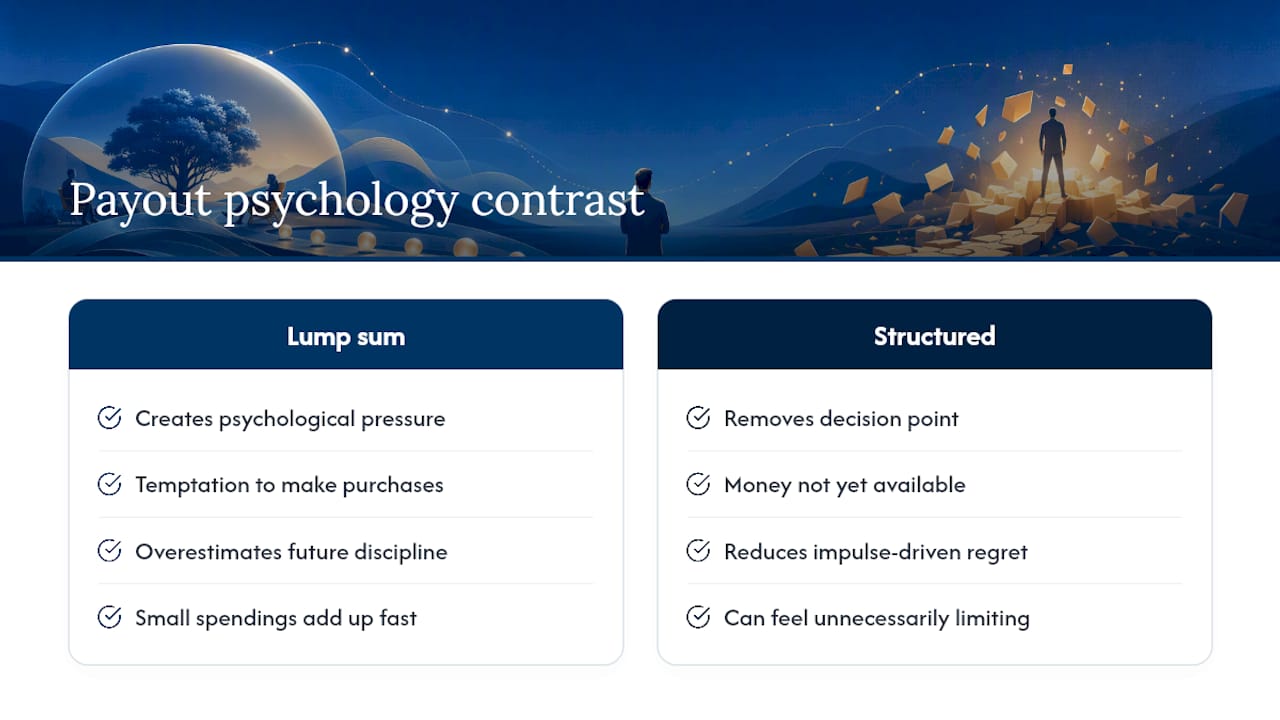
People rarely choose between structured settlements and lump sums on math alone. A large number sitting in an account creates real psychological pressure, from relatives asking for loans to the simple temptation of a major purchase that feels earned after months of pain and legal stress.
Behavioral finance research helps explain the regret patterns documented in lump-sum recipient surveys. People systematically overestimate their own future discipline. The plan to “invest most of it and just spend a little” often gives way to spending decisions that feel small individually but add up fast over the first year or two.
Structured payments remove that decision point entirely; there’s nothing to resist because the money simply isn’t available yet. For some clients, that’s a relief. For others, particularly those confident in their financial management or already running a business that needs capital, the restriction feels unnecessarily limiting. Neither reaction is wrong. It’s worth being honest with yourself, and with your attorney, about which category you fall into before the paperwork gets signed. A structured settlement chosen out of fear of your own impulses works differently than one chosen because it genuinely matches a long-term medical need, even though the contract looks identical either way.
Creditors, Liens, and Who Else Has a Claim on Your Settlement
Before any settlement money reaches you, several parties may already have a legal claim against it. Medical providers who treated you on a lien basis, health insurers seeking reimbursement, and Medicaid or Medicare, if either paid for your treatment, typically get paid from the settlement before you see the remainder.
Structured settlements offer one underappreciated advantage here: because the funds arrive gradually rather than all at once, certain creditors have a harder time attaching future periodic payments compared to a lump sum sitting in a bank account. That protection isn’t absolute, and it varies by state and by the type of debt involved, but it’s a real factor attorneys weigh when advising clients with existing liens or judgments against them.
A lump sum, once deposited, becomes a much easier target for creditors, especially if you fall behind on other obligations after receiving it. If you’re carrying significant medical debt or facing other financial judgments, this is exactly the kind of detail to raise with your attorney before choosing a structure, not after the check clears.
An Editorial Take on Getting This Decision Right
The conventional advice on structured settlement versus lump sum treats it like a simple risk tolerance quiz, when it’s really a legal and financial modeling problem dressed up as a lifestyle choice. The research points somewhere more specific: the tax exemption under IRC §104 and the present-value discount rate matter more than most people’s gut instinct about which option “feels safer.”
What gets underweighted constantly is the interest rate environment at the time of settlement. A structured offer negotiated when rates are low locks in less value than the same offer negotiated when rates are higher, yet clients rarely ask when that rate was set or how it compares to current alternatives.
My honest read is that most people should default to a hybrid structure unless there’s a clear catastrophic-care need or a documented ability to manage a large sum responsibly. Run the present-value math with an actual CFP before deciding anything, and treat any unsolicited factoring offer as a warning sign, not an opportunity.
— Jorge
How Calil Law Helps You Evaluate a Settlement Offer
Structured and lump-sum offers should be reviewed side by side, running present-value comparisons and flagging terms that may favor the insurance company over the client. Annuity structures are negotiated directly with defense counsel and assignment companies, especially in catastrophic injury cases where the schedule can significantly impact long-term security.

Bring any settlement paperwork, medical bills, and a summary of ongoing care needs to your consultation to walk through what a fair structured offer might look like, or whether a lump sum or hybrid better fits different circumstances. Start by reviewing what a personal injury claim actually covers, then reach out through our personal injury practice page to schedule a case review before you sign anything.
This article is general information, not a substitute for advice from a qualified lawyer. Consult a qualified legal professional about your own circumstances before acting on anything here.
Sources
- CFPB guidance: what to know before giving up periodic payments for a one-time lump sum
- It’s their money: How attorneys advise on lump-sum vs. structured settlements (The Indiana Lawyer)
- Sequence-of-returns risk explained (Thrivent)
- Financial pitfalls of choosing a lump sum (Investopedia summary citing MetLife data)


