 Skip to Content

What Is a Personal Injury Claim? Your Legal Rights Explained
A personal injury claim is a civil lawsuit filed by an injured individual seeking monetary compensation for harm caused by another party’s negligence, intentional misconduct, or strict liability. Unlike a criminal case, which the government prosecutes, a personal injury claim is brought by you, the injured person, against the party responsible for your losses. The American Bar Association confirms that these claims aim to cover losses like medical bills, lost wages, and pain and suffering, with the goal of restoring you financially as much as the law allows.
Here is what a personal injury claim typically involves:
- The plaintiff: The injured person who files the claim
- The defendant: The individual, business, or entity whose actions caused the harm
- The harm: Bodily injury, emotional distress, or reputational damage
- The legal basis: Negligence, strict liability, or an intentional wrong
- The remedy: Monetary damages to compensate for your losses
Your life has value. When someone else’s actions take something from you, the law gives you a path to hold them accountable.
What legal grounds support a personal injury claim?
Three distinct legal theories can support a personal injury claim, and understanding which one applies to your situation shapes everything from how liability is proven to what damages you can recover.
- Negligence is the most common basis. As the Cornell Law School Legal Information Institute explains, negligence arises when someone fails to exercise the level of care that a reasonably prudent person would have used under the same circumstances. A driver who runs a red light, a property owner who ignores a broken staircase, a doctor who misreads a chart — all of these can constitute negligence.
- Strict liability holds a defendant responsible regardless of intent or carelessness. Product liability cases are the clearest example: if a defectively designed product injures you, the manufacturer bears responsibility even if they took every precaution during production.
- Intentional wrongs arise from deliberate acts. Battery, assault, false imprisonment, and intentional infliction of emotional distress all fall into this category. A physical attack, for instance, can give rise to both a criminal prosecution and a separate civil personal injury claim.
Two core issues run through every personal injury case: liability (who is legally responsible) and damages (what compensation you are owed). Proving both is your burden as the plaintiff.
Pro Tip: If you are unsure which legal theory applies to your situation, that uncertainty is itself a reason to consult an attorney early. The wrong framing can limit your recovery before you even file.

Common causes and types of personal injury claims
Personal injury claims arise from a wide range of circumstances. Some involve split-second accidents; others stem from ongoing negligence or deliberate harm. The LII at Cornell Law School identifies the most frequent categories:
- Automobile and motorcycle accidents: Collisions caused by distracted, impaired, or reckless drivers are among the leading sources of serious injury claims in the United States.
- Workplace accidents: On-the-job injuries may trigger a workers’ compensation claim, a third-party personal injury claim, or both, depending on who caused the harm.
- Assault and battery: A deliberate physical attack creates civil liability alongside any criminal charges, allowing the victim to pursue compensation independently.
- Product defects: Defective design, manufacturing flaws, or inadequate warnings can make a manufacturer or seller liable for injuries under strict liability doctrine.
- Medical malpractice: When a healthcare provider’s care falls below the accepted professional standard and causes harm, a malpractice claim may follow.
- Premises liability: Property owners have a legal duty to maintain reasonably safe conditions. Slip-and-fall injuries, inadequate security, and pool accidents are common examples covered under premises liability law.
- Nursing home abuse: Neglect or mistreatment of residents in care facilities can give rise to claims on behalf of vulnerable individuals.
- Toxic torts: Exposure to harmful chemicals, contaminated water, or dangerous substances can affect entire communities and support mass tort litigation.
- Non-bodily harm claims: Defamation, invasion of privacy, and malicious prosecution also qualify as personal injuries under the law, even without physical contact.
Each category carries its own evidentiary demands and legal standards, which is why the type of claim matters as much as the underlying facts.
What kinds of damages can you recover?
Damages in a personal injury case fall into three broad categories, and knowing the difference between them directly affects how you build your claim.
- Special damages cover your quantifiable economic losses. Medical bills, pharmacy costs, physical therapy fees, lost wages, and property damage all belong here. The more precisely you document these expenses, the harder it is for an insurance adjuster to dispute your numbers.
- General damages address the non-economic impact of your injuries: pain and suffering, emotional distress, lost sleep, anxiety, and the inability to enjoy activities you once loved. There is no receipt for suffering, so these figures require a different approach. Insurance companies often apply a multiplier method, taking your total special damages and multiplying by a factor of 1.5–5 depending on injury severity, permanence, and disruption to daily life.
- Punitive damages are awarded in cases where the defendant’s conduct was especially reckless or malicious. They are not meant to compensate you; they are meant to punish the wrongdoer and deter similar behavior. Courts award them far less frequently than compensatory damages, and their availability varies by state.
Two additional factors can reduce what you actually take home. Medical liens allow your health insurer or provider to seek reimbursement from your settlement for accident-related care they covered. Comparative negligence rules, which most states follow, reduce your award by the percentage of fault assigned to you. A $100,000 verdict where you are found 20% at fault becomes an $80,000 recovery. Understanding compensatory damages in full, before you settle, protects you from leaving money on the table.
How the personal injury claim process works, step by step
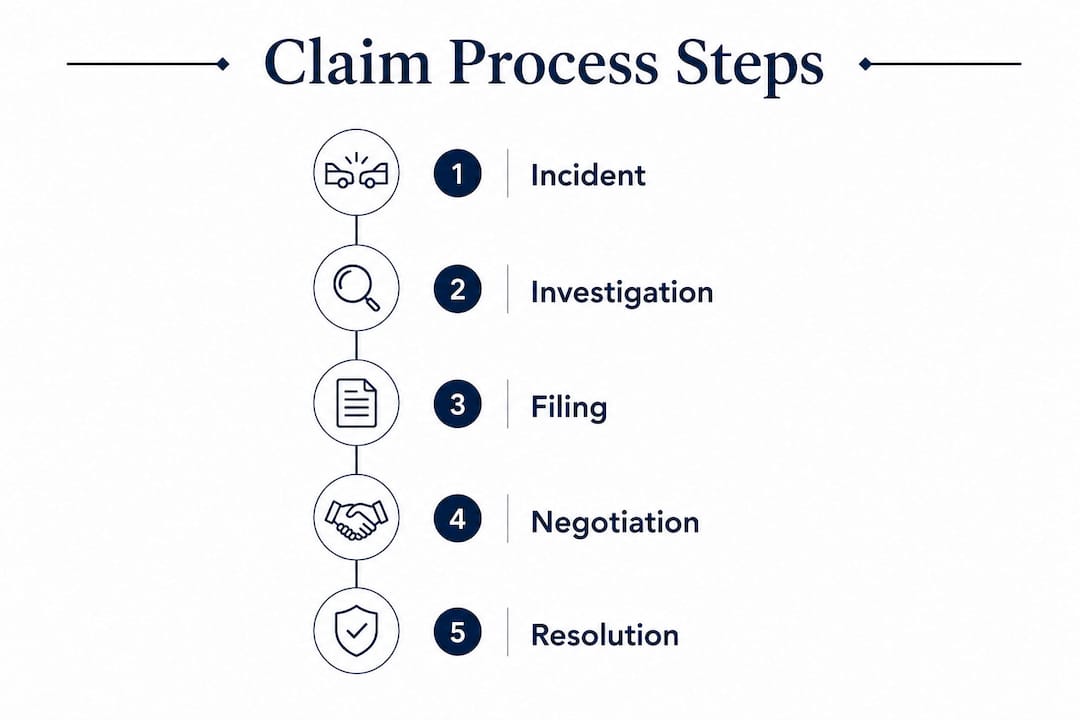
The personal injury claim process follows a recognizable sequence, though the timeline and complexity vary widely depending on the facts of your case. Most cases settle before trial, but every step matters because what you do early shapes what you can recover later.
-
Seek immediate medical care. Your health comes first, and your medical records become the foundation of your claim. Gaps in treatment give insurers ammunition to argue your injuries were not serious or were caused by something else.
-
Document everything. Photograph the scene, preserve physical evidence, collect witness contact information, and request a copy of any police report. Strong documentation makes liability harder to dispute.
-
Notify the at-fault party’s insurer. This initial notice of claim should state the date, location, and parties involved. Keep it brief. Do not detail fault, describe the full extent of your injuries, or make a dollar demand at this stage. Its only purpose is to open a file and get an adjuster assigned.
-
Complete your treatment or reach maximum medical improvement (MMI). MMI is the point at which your condition has stabilized and further significant recovery is unlikely. Settling before MMI risks undervaluing both your current and future damages.
-
Send a detailed demand letter. Once you understand the full scope of your injuries, prepare a demand letter that lays out how the accident happened, why the defendant is liable, and exactly what compensation you are seeking. Attach medical bills, records, proof of lost income, and any other supporting evidence. Send it by certified mail.
-
Negotiate with the insurance company. The adjuster will respond with a counteroffer, often well below your demand. This is where attorney-led negotiations change the dynamic. Lawyers who have tried cases to verdict negotiate from a position of credibility that unrepresented claimants rarely achieve.
-
File a lawsuit if negotiations stall. If the insurer refuses to offer a fair amount, your attorney files a formal complaint in civil court. Defendants typically have a few weeks to respond after being served.
-
Enter the discovery phase. Both sides exchange evidence, take depositions, and assess the strengths and weaknesses of each other’s case. Discovery often drives settlement because it forces both parties to confront the risks of going to trial.
-
Settle or go to trial. The majority of cases resolve during or after discovery. If no agreement is reached, the case proceeds to trial, where a judge or jury decides liability and damages.
Why statutes of limitations can make or break your claim
A statute of limitations is a legal deadline for filing a personal injury lawsuit. Miss it, and the court will refuse to hear your case regardless of how strong your evidence is. These deadlines vary by state and by the type of claim, which makes knowing your specific deadline one of the first things you should confirm after an injury.
- State-by-state variation: Filing windows differ across jurisdictions and can also differ based on who the defendant is. Claims against government entities, for example, often carry much shorter notice requirements.
- The clock usually starts at the date of injury, though some states apply a “discovery rule” that starts the clock when you knew or reasonably should have known about the injury.
- Service deadlines add another layer. After filing a lawsuit, you typically have a definite but variable period to properly serve the defendant. Failing to serve within that window can be treated as a defect that prevents the court from proceeding.
- Missing the deadline is almost always fatal to your claim. Courts rarely grant exceptions, and the few that exist, such as the minority tolling rule for injured children, are narrow and fact-specific.
For Florida residents, the Florida personal injury statute of limitations carries specific deadlines that changed with recent legislative updates. Confirming your deadline early is not optional. It is the first act of protecting your rights.
Expert insights from Calillaw’s trial attorneys on navigating your claim
Personal injury law sits at the intersection of medicine, insurance, and litigation strategy. Getting the law right is necessary but not sufficient. You also need to understand how the system actually operates.
The single most common mistake injured people make is settling too soon. Once you accept a settlement and sign a release, that claim is closed permanently. If your condition worsens or new medical needs emerge, you have no further recourse. Reaching maximum medical improvement before any settlement discussion is not just good advice — it is the difference between a fair recovery and a permanent financial shortfall.
Civil liability and criminal charges are legally separate, even when they arise from the same event. An assault victim can pursue a personal injury claim against the attacker in civil court while the state simultaneously prosecutes the same person criminally. The civil case requires only a preponderance of the evidence, a lower standard than the criminal “beyond a reasonable doubt” threshold, which often makes civil recovery more accessible.
Insurance adjusters work for the insurer, not for you. Their job is to resolve your claim for as little as possible. An experienced trial attorney changes that dynamic because adjusters know that a lawyer who tries cases will actually take the case to trial if the offer is inadequate. That credibility produces better offers.
Comparative fault is another factor that can quietly erode your recovery. If the defense can establish that you were partially responsible for the accident, your damages are reduced proportionally. Experienced counsel anticipates these arguments and builds the record to counter them before they gain traction. Factors like how compensation is determined against an insurer often hinge on this preparation.
Pro Tip: Never give a recorded statement to the opposing insurer without first speaking to an attorney. Adjusters are trained to ask questions that elicit answers they can use to minimize your claim.
Compensation beyond standard damages: punitive awards and attorney fees
Standard compensatory damages, both special and general, cover what you lost. But two additional forms of compensation can arise in the right circumstances, and understanding them helps you see the full picture of what a personal injury claim can deliver.
Punitive damages go beyond making you whole. Courts award them when a defendant’s conduct was willful, wanton, or grossly reckless, behavior that rises well above ordinary negligence. A drunk driver who caused a catastrophic crash, a company that knowingly sold a dangerous product, a landlord who ignored repeated warnings about a hazardous condition: these are the scenarios where punitive damages become a real possibility. Their purpose is deterrence and punishment, not compensation, and they can substantially increase the total value of a verdict.
Attorney fees in personal injury cases are almost universally handled on a contingency basis. You pay nothing upfront. Your attorney takes a percentage of the recovery, typically agreed upon before representation begins, and collects only if you win. This arrangement means that access to experienced legal representation is not limited to those who can afford hourly billing. It also aligns your attorney’s financial interest directly with yours: the larger your recovery, the larger their fee.
Some cases also involve cost recovery, where the defendant is required to pay litigation expenses such as court filing fees, expert witness costs, and deposition expenses. Whether costs are recoverable depends on the outcome and applicable state law. In cases where the defendant’s insurer acted in bad faith by unreasonably refusing to settle a valid claim, additional remedies may be available under bad faith insurance statutes, including damages beyond the original policy limits.
Key Takeaways
A personal injury claim gives injured individuals a civil legal path to recover financial compensation from the party responsible for their harm, and the outcome depends heavily on timing, documentation, and legal strategy.
| Point | Details |
|---|---|
| Three legal grounds | Negligence, strict liability, and intentional wrongs each support a personal injury claim under U.S. law. |
| Damages have two tiers | Special damages cover economic losses; general damages cover pain, suffering, and life disruption. |
| Timing is critical | Statutes of limitations vary by state; missing the deadline permanently bars your claim. |
| Settle after MMI | Accepting a settlement before reaching maximum medical improvement risks undervaluing future medical needs. |
| Legal representation changes outcomes | Attorneys experienced in trial litigation negotiate from credibility, consistently producing stronger settlement offers. |
Ready to protect your rights? Calillaw is here for you.

If you or someone you love has been injured through another party’s negligence or misconduct, you deserve counsel that fights as hard as you do. At Calillaw, our Board Certified Civil Trial Lawyers bring decades of courtroom experience to every personal injury case we handle. We know how insurance companies operate, we know how to build a case that holds up at trial, and we know what it takes to maximize your recovery.
You do not pay unless we win. Contact Calillaw today for a free consultation and let us put our trial-tested judgment to work for you.
Recommended
- What Are Compensatory Damages in Personal Injury Claims? – Calil Law
- Catastrophic Injury Claim Explained: Your 2026 Guide – Calil Law
- Three Key Reasons to Hire a Personal Injury Attorney – Calil Law
- Why Using A Personal Injury Law Firm Is Critical Before Filing A Lawsuit In An Accident Case – Calil Law


